


Local Date – Flirt, Chat, Meet
4.6194.00 Reviews
App Specs
- Version
- 1.1.0
- Updated On
- License
- Free
- Downloads
- 50,000+
- Developer
- eGame Lix
- Categories
- Social
- Platform
- Android
Screenshots
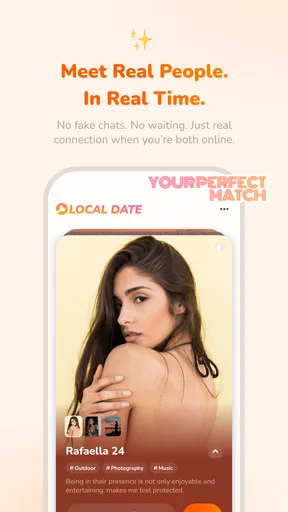
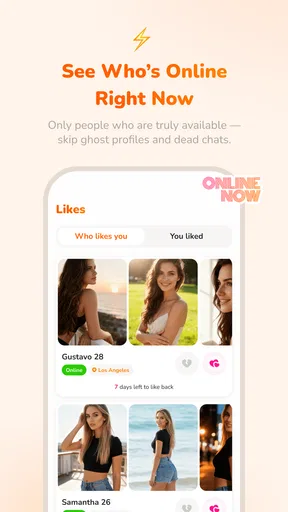


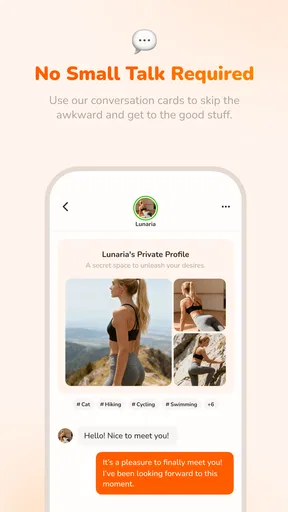
 Analysis by AppCompare
I tried Local Date – Flirt, Chat, Meet as a social app built around a simple idea: spend less time writing endless introductions and more time finding people who are actually available to talk. That focus gives it a different feel from a conventional dating profile catalog. Instead of treating every connection as a carefully prepared presentation, it leans toward the immediacy of meeting someone who is active in the same general area and open to conversation.
That immediacy is also the reason I would not recommend it blindly to everyone. It suits adults who enjoy quick exchanges and are comfortable making decisions with limited context. It is less suitable for someone who wants a slow, highly detailed matching process before starting a chat. My overall impression is positive, but the app works best when I treat it as a starting point for a real conversation rather than as a guarantee of compatibility.
How the current experience feels
The app comes from eGame Lix and sits in the social category, with a mature audience in mind. It is free to install, although optional purchases range from $1.99 to $39.99 per item. That combination makes the first step easy, but it also means I would pay attention to which actions are available without spending and which ones are presented as upgrades during normal use.
The audience signal is fairly strong: Local Date has a 4.6 average from around 2.3 thousand ratings and has passed 50 thousand installs. Those figures suggest that the concept has found an interested group, while the still modest overall reach makes the experience feel more dependent on where you live. In a busy area, the real-time approach has a better chance of feeling lively. In a quieter location, the app may feel much less useful even if the interface itself works well.
My first practical recommendation is to judge the app by the quality and activity of nearby conversations, not just by how attractive the profile browsing experience looks. A social app can appear polished while offering little value if there are too few suitable people available at the times you normally use it. Local Date’s central promise depends on that local activity more than a traditional swipe service does.
A better fit for spontaneous conversations
I see the strongest use case in ordinary moments when I genuinely have time to talk. Imagine finishing work earlier than expected, sitting in a familiar café, and wanting to meet someone for a short walk or a casual drink rather than arranging an elaborate date several days ahead. The app’s real-time orientation can make that situation feel more natural than sending a message to someone who may not open it until next week.
That same design creates a useful discipline: I can state what I am available for instead of building a profile that tries to appeal to everyone. A clear opening message such as “I have an hour free and would enjoy a relaxed conversation nearby” is more helpful than a vague compliment. It sets expectations early and makes it easier for the other person to decide whether the timing and mood suit them.
Worth Reading Before You Choose

EA SPORTS FC Mobile 26 Is a Bigger Football Game, but It Takes Time

Flipboard Shows What News Apps Must Do Beyond the Feed

Switching to Android Auto Means Rethinking Your Driving Routine

Google Calendar Makes a Crowded Week Easier to Manage

Ludo King Makes the Most of the Minutes Between Plans

Baby Panda World Brings Quick Play to Modern Phones, but Its Game Library Feels Busy
A less obvious benefit is that the app encourages me to separate availability from long-term compatibility. Someone being active now does not mean we share the same interests, values, or intentions. I would use the immediate connection to begin a conversation, then ask the important questions before agreeing to meet. That small mental adjustment prevents the real-time format from creating unrealistic expectations.
Where it differs from familiar dating apps
Most established dating apps are built around profiles, matching queues, and messages that can remain open for days. They are often better when I want to compare several details before deciding whom to contact. Local Date feels more direct: the point is not simply to collect matches, but to find a person who is present and willing to engage now.
That difference is valuable when delayed replies are the main frustration. It is less valuable when I prefer careful filtering. A profile-first service may be the better choice for someone who wants extensive prompts, detailed compatibility signals, or a large archive of potential matches. Local Date is more appealing to people who would rather discover chemistry through a short exchange than infer it from a polished profile.
I would also compare it with ordinary social networks. A general network may offer a larger pool of contacts, but its purpose is broader and the romantic context can be unclear. Local Date makes the intention more obvious, which can reduce awkwardness at the beginning. On the other hand, that clarity can make conversations feel more exposed, especially for users who are not comfortable with direct flirting.
What the current version adds to the decision
The current release is version 1.1.0, and the app was released on November 20, 2025. Those details matter less as marketing points than as context: this is a relatively young product experience, so I would expect the balance between available users, interface refinement, and paid options to keep changing. I would not assume that a feature I see today defines the long-term direction of the service.
For existing users, a version number is most useful when it helps explain whether the app feels stable enough for regular use. In my view, the sensible approach is to update normally, then reassess the parts that matter most: how quickly conversations begin, whether nearby activity feels relevant, and whether the path from discovery to chat remains clear. A new version can improve the surface while leaving the central local-network challenge unchanged.
I also would not confuse a newer release with a larger community. Product evolution and user density are separate things. An improved interface may make browsing more comfortable, but it cannot by itself create more compatible people in a particular neighborhood. That is why I would test Local Date at the times I actually go out, rather than judging it after one visit during an unusually quiet period.
How to use it without wasting time
My preferred workflow is deliberately short. I would first decide what kind of interaction I want today, then write a profile or opening message that reflects that purpose. Next, I would focus on people whose situation appears compatible with my timing instead of sending the same line to everyone. Finally, I would move from small talk to practical questions: what they are looking for, whether they prefer chatting first, and what kind of meeting would feel comfortable.
This approach avoids one of the main weaknesses of real-time social tools: the temptation to treat speed as the same thing as quality. Fast replies are encouraging, but they are not evidence that a person is trustworthy or suitable. I would keep the first exchange inside the app until I have enough context, and I would choose a public place for any first meeting. The app’s mature rating makes it clear that the intended audience is adults, but an age label does not replace personal caution.
Another useful habit is to use the app during realistic windows rather than checking it constantly. If I only have ten minutes, I may create pressure to force a conversation that is not ready. If I know I have a free evening, I can respond thoughtfully and make a plan without rushing. That makes the real-time concept work for me instead of allowing it to dictate my behavior.
What may frustrate new and returning users
The biggest limitation is the dependence on local participation. A person can do everything correctly and still see few worthwhile opportunities because the nearby audience is small, inactive, or not aligned with their preferences. This is not a problem that better wording can always solve. If the app feels empty in your area, a larger established service may provide a more reliable pool.
The second friction point is the reduced amount of information available before contact. That can be refreshing, but it also increases the number of conversations that end quickly. I would expect more trial and error than with a platform that uses extensive questionnaires or detailed prompts. People who dislike brief, uncertain interactions may find the experience tiring rather than liberating.
Paid items are another point to consider. Because the app is free while offering in-app purchases, I would not spend immediately to compensate for a weak local experience. First I would use the no-cost path long enough to understand whether there are suitable people to meet. Spending may make sense only when the basic community already feels useful and I know exactly what additional value I am buying.
Privacy and comfort also deserve attention, especially because the app’s appeal is tied to location and immediate availability. I would avoid sharing a home address, workplace details, or a predictable daily routine in early messages. If someone pushes for a private meeting before establishing basic trust, I would treat that as a reason to stop the conversation, not as proof that the app is failing.
Who should choose it, and who should skip it
I would recommend Local Date to an adult who likes direct communication, lives somewhere with enough nearby activity, and is willing to make their intentions clear. It can be a good option for people who find conventional matching apps too slow or too focused on polished profiles. It is also useful for someone who wants a conversation connected to the present moment rather than another open-ended message thread.
I would skip it if I wanted a highly structured compatibility system, a large selection regardless of location, or a completely private way to browse without discussing immediate plans. Someone who is new to online dating and wants maximum guidance may feel more comfortable with an established service that explains each stage in greater detail. Likewise, people seeking only friendship should check whether the conversations they encounter match that goal, because the app’s name and mature positioning point toward flirtation and dating.
There is also a personality factor. I enjoy the possibility that a short, honest exchange can be more revealing than a long profile, but not everyone finds that exciting. If you prefer to compose messages carefully and wait until you feel certain, the app’s faster rhythm may feel like pressure. In that case, using it alongside a slower dating service rather than replacing everything may be the more sensible choice.
What I would watch as the product develops
For a young social app, I would watch community depth more closely than cosmetic changes. The important question is whether Local Date becomes useful at different times of day and in more types of locations, not merely whether the screen looks cleaner. I would also look for clearer ways to understand a person’s intentions before starting a conversation, because that could reduce mismatched expectations without undermining the app’s spontaneous character.
I would pay attention to how the paid model affects ordinary use as well. Optional purchases can be reasonable when they add convenience, but the free experience needs to remain meaningful enough for a newcomer to evaluate the service honestly. The best sign would be a clear distinction between useful free participation and optional extras, rather than pressure to pay before discovering whether the local community is active.
Existing users should watch whether the app preserves its central advantage as it grows. More people can improve choice, but a busier service can also make conversations feel less personal. The strongest future version would keep the immediacy while helping users communicate boundaries, intentions, and meeting preferences with less ambiguity.
After using it, my recommendation is cautious but favorable. Local Date offers a focused alternative to endless profile browsing, and its real-time approach can be genuinely refreshing when I want to talk to someone nearby today rather than sometime later. Its success depends on matching the app’s pace with my own comfort level and local activity. I would install it for the free experience, test it during the hours when I would realistically meet someone, and only then decide whether it deserves regular use or optional spending. For the right adult user, that is a fair experiment; for everyone else, a slower and more established dating platform may still be the better fit.
Pros
- Simple interface makes browsing profiles quick and easy.
- Useful filters help narrow matches by location and preferences.
- Chat tools make starting conversations straightforward.
- Profile discovery can be convenient for nearby dating opportunities.
- Suitable for users seeking casual local connections.
Cons
- Some features may require a paid subscription or in-app purchases.
- Match quality depends heavily on the number of active local users.
- Profiles may vary widely in detail and authenticity.
- Location-based dating can raise privacy concerns for some users.
- Notifications and messages may become distracting over time.
FAQs for Local Date – Flirt, Chat, Meet
What is Local Date – Flirt, Chat, Meet?
Local Date – Flirt, Chat, Meet is a dating and social discovery app designed to help people connect with nearby users. After creating a profile, you can browse potential matches, view photos and personal details, send messages, and explore opportunities for friendship, flirting, or dating. The experience depends heavily on the number of active users in your location and how complete your profile is.
Is Local Date – Flirt, Chat, Meet free to use?
The app can generally be downloaded and used without an upfront payment, but some features may be limited or supported by optional in-app purchases or premium subscriptions. Depending on the current version, advanced communication tools, increased visibility, or additional profile interactions may require payment. Before subscribing, carefully check the pricing, renewal terms, and cancellation options shown in the app store.
How do I create a profile and find people nearby?
To get started, you typically need to register an account, provide basic information, upload a profile photo, and set preferences such as age range or distance. Location access may be requested to show nearby members. A clear description and recent photos can improve your chances of receiving responses. You should only provide information you are comfortable sharing publicly.
Is Local Date – Flirt, Chat, Meet safe for meeting strangers?
The app may offer tools such as blocking and reporting, but no dating platform can guarantee that every profile is genuine or that every conversation is safe. Avoid sending money, sharing passwords, or revealing sensitive personal details. Take time to verify someone’s identity, keep early conversations inside the app, and meet for the first time in a busy public place while informing a trusted person.
Can I delete my account and control notifications or privacy settings?
Most versions provide settings for managing notifications, profile visibility, permissions, and account access. Look through the settings menu before using the service extensively, especially if you do not want frequent alerts or location-based features enabled. If you decide to leave, use the in-app account deletion option if available, and remember that uninstalling the app alone may not delete your profile or personal data.


